Roast Duck Honey Balsamic Glaze
Highlighted under: Hearty Food Recipes
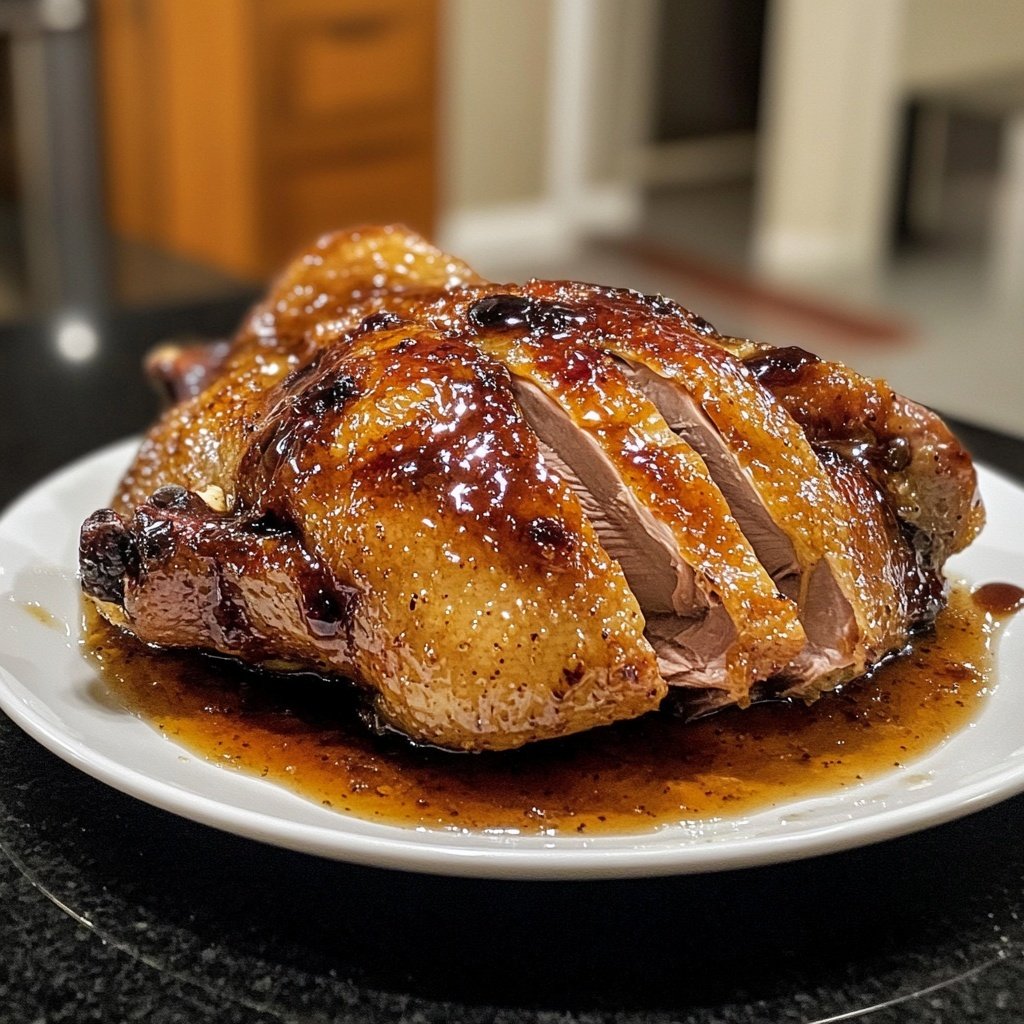
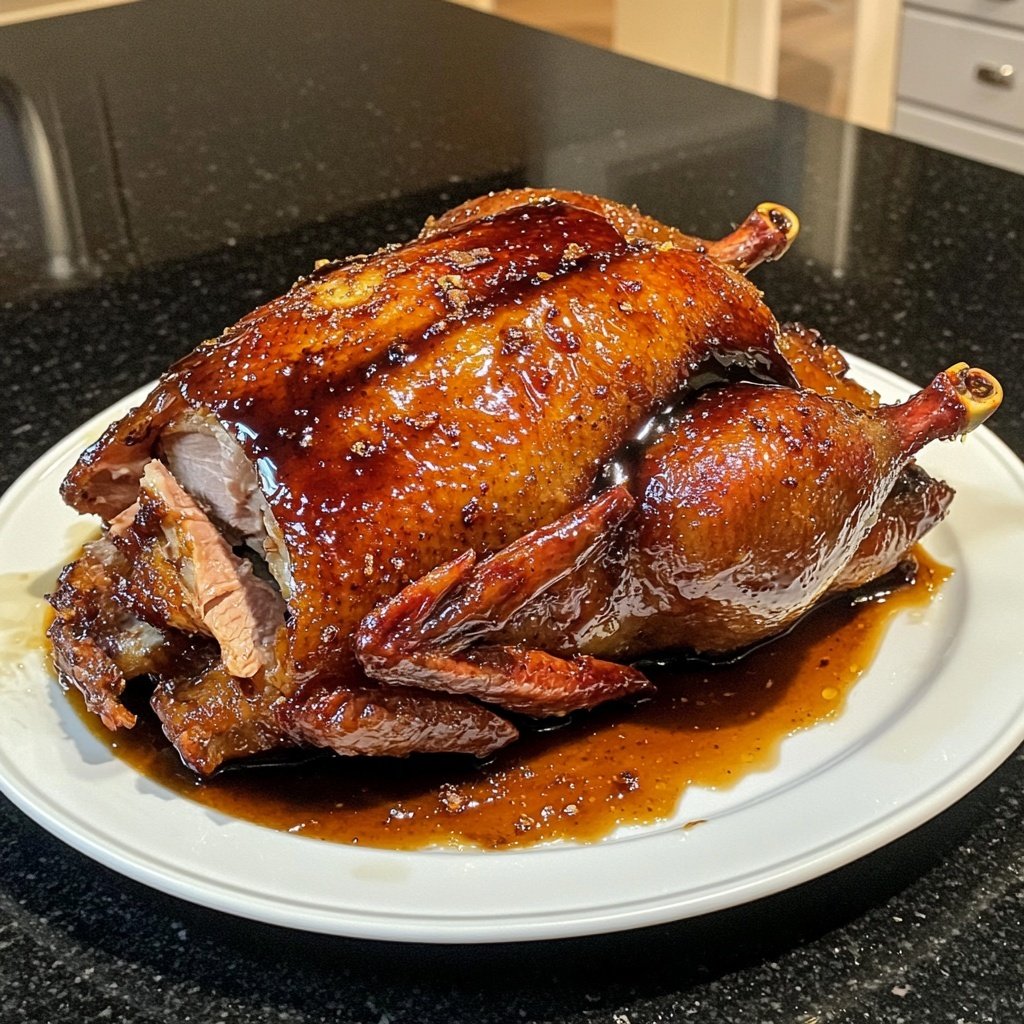
Discover the rich and savory flavors of this Roast Duck with Honey Balsamic Glaze, perfect for a special occasion or a cozy dinner at home.
This Roast Duck with Honey Balsamic Glaze is a show-stopping dish that combines the rich flavors of duck with a sweet and tangy glaze. Perfect for festive gatherings or special dinners, it’s sure to impress your guests.
Why You'll Love This Recipe
- The succulent and juicy duck paired with a sweet and tangy glaze
- A stunning centerpiece for your dining table
- Perfect balance of flavors that will tantalize your taste buds
The Art of Duck Cooking
Cooking duck can be a rewarding experience, but it does require some attention to detail. The key to perfectly roasted duck lies in the preparation and cooking methods. Unlike chicken, duck has a thicker layer of fat beneath the skin, which keeps the meat juicy. Properly rendering this fat while achieving crispy skin is essential for a delicious results. By following the steps in this recipe, you’ll unlock the secrets to achieving that coveted crispy skin and moist meat that’s sure to impress your guests.
When selecting a duck, look for one that feels heavy for its size and has a good layer of fat. This will ensure that the meat is tender and flavorful. Additionally, consider the sourcing of your duck. Organic or free-range options often provide a superior taste and texture, making your dish even more special. Investing a little extra in high-quality ingredients can elevate your roast duck to an entirely new level.
The Perfect Glaze
The honey balsamic glaze is what truly sets this roast duck apart. Its sweet and tangy notes complement the rich flavor of the duck beautifully. The balance of acidity from the balsamic vinegar and sweetness from the honey enhances the natural flavors of the meat. As the glaze cooks, it thickens and caramelizes, creating a delightful crust on the duck that adds both texture and taste.
For an extra layer of flavor, consider adding additional herbs or spices to the glaze. Fresh rosemary or a hint of orange zest can provide a unique twist that personalizes the recipe to your liking. Experimenting with flavors not only enhances the dish but also makes it an expression of your culinary style. Don’t be afraid to get creative!
Serving Suggestions
Once your roast duck is perfectly cooked and resting, it’s time to think about sides that will complement this exquisite dish. Traditional accompaniments include roasted vegetables, wild rice, or a fresh salad. These options not only balance the richness of the duck but also add color and nutrition to your table. Consider seasonal vegetables for a fresh touch that enhances the overall presentation.
For a more indulgent experience, pair your duck with creamy mashed potatoes or a rich gravy. The contrasting textures and flavors will elevate your meal to a gourmet level. Additionally, a glass of red wine, such as Pinot Noir or Merlot, pairs wonderfully with duck, enhancing the dining experience. Make sure to have your favorite wine chilled and ready to serve!
Ingredients
Ingredients
For the Duck
- 1 whole duck (approximately 4-5 lbs)
- Salt and pepper to taste
- 2 tablespoons olive oil
For the Honey Balsamic Glaze
- 1/2 cup honey
- 1/2 cup balsamic vinegar
- 2 cloves garlic, minced
- 1 teaspoon fresh thyme leaves
- Salt and pepper to taste
Make sure to gather all ingredients before starting the cooking process for a smooth preparation.
Instructions
Cooking Steps
Prepare the Duck
Preheat your oven to 375°F (190°C). Rinse the duck under cold water and pat it dry with paper towels. Season the cavity and skin generously with salt and pepper. Rub the outside with olive oil.
Make the Glaze
In a small saucepan, combine honey, balsamic vinegar, minced garlic, and thyme. Bring to a simmer over medium heat and let it cook for about 5 minutes, stirring occasionally until slightly thickened.
Roast the Duck
Place the duck on a roasting rack in a roasting pan. Brush half of the glaze over the duck. Roast in the preheated oven for about 90 minutes, basting with the remaining glaze every 30 minutes, until the skin is crispy and the internal temperature reaches 165°F (74°C).
Rest and Serve
Once cooked, remove the duck from the oven and let it rest for 15 minutes before carving. Serve with your choice of sides and drizzle with any remaining glaze.
This roast duck pairs wonderfully with roasted vegetables or a fresh salad for a complete meal.
Pro Tips
- For an extra crispy skin, ensure the duck is patted dry and allow it to rest uncovered in the fridge for a few hours before roasting.
Storing Leftovers
If you're lucky enough to have leftovers after your meal, storing them properly is key to maintaining their flavor and texture. Allow the duck to cool completely before wrapping it tightly in plastic wrap or aluminum foil. Store it in an airtight container in the refrigerator, where it should remain fresh for up to three days. For longer storage, consider freezing the duck, which can preserve its quality for up to three months.
When reheating, it’s best to do so in the oven to keep the skin crispy. Preheat your oven to 350°F (175°C) and place the duck on a baking sheet. Cover it loosely with foil to prevent drying out. Heat until warmed through, about 20-30 minutes. This method will help to retain the moistness of the meat while giving the skin a chance to crisp up again.
Variations to Try
While this recipe focuses on a honey balsamic glaze, there are countless variations you can try to suit your taste preferences. For instance, a cranberry-orange glaze can add a festive touch for holiday gatherings, while a soy-ginger marinade might lend an Asian twist to your dish. Simply adjust the glaze ingredients and follow the same roasting method for delicious results.
You can also experiment with different herbs in the glaze. Adding fresh herbs like rosemary or sage can create unique flavor profiles that complement the duck exquisitely. Don't hesitate to try out different combinations to discover new favorites, making this roast duck recipe your own!
Questions About Recipes
→ Can I use duck breast instead of a whole duck?
Yes, you can use duck breast. Adjust the cooking time accordingly as duck breasts cook faster.
→ What should I serve with roast duck?
Roast duck pairs well with roasted vegetables, mashed potatoes, or a fresh salad.
→ How do I store leftovers?
Store leftover roast duck in an airtight container in the refrigerator for up to 3 days.
→ Can I freeze the duck?
Yes, you can freeze cooked duck. Wrap it tightly in plastic wrap and place it in an airtight container for up to 3 months.
Roast Duck Honey Balsamic Glaze
Created by: The Kitchennectar Team
Recipe Type: Hearty Food Recipes
Skill Level: Intermediate
Final Quantity: 4 servings
What You'll Need
For the Duck
- 1 whole duck (approximately 4-5 lbs)
- Salt and pepper to taste
- 2 tablespoons olive oil
For the Honey Balsamic Glaze
- 1/2 cup honey
- 1/2 cup balsamic vinegar
- 2 cloves garlic, minced
- 1 teaspoon fresh thyme leaves
- Salt and pepper to taste
How-To Steps
Preheat your oven to 375°F (190°C). Rinse the duck under cold water and pat it dry with paper towels. Season the cavity and skin generously with salt and pepper. Rub the outside with olive oil.
In a small saucepan, combine honey, balsamic vinegar, minced garlic, and thyme. Bring to a simmer over medium heat and let it cook for about 5 minutes, stirring occasionally until slightly thickened.
Place the duck on a roasting rack in a roasting pan. Brush half of the glaze over the duck. Roast in the preheated oven for about 90 minutes, basting with the remaining glaze every 30 minutes, until the skin is crispy and the internal temperature reaches 165°F (74°C).
Once cooked, remove the duck from the oven and let it rest for 15 minutes before carving. Serve with your choice of sides and drizzle with any remaining glaze.
Extra Tips
- For an extra crispy skin, ensure the duck is patted dry and allow it to rest uncovered in the fridge for a few hours before roasting.
Nutritional Breakdown (Per Serving)
- Calories: 550 kcal
- Total Fat: 40g
- Saturated Fat: 10g
- Cholesterol: 120mg
- Sodium: 300mg
- Total Carbohydrates: 24g
- Dietary Fiber: 0g
- Sugars: 20g
- Protein: 30g